Launch Monitor Type Explained: What It Means for Golf Launch Monitors
As an Amazon Associate we earn from qualifying purchases. Links on this page are affiliate links.
Understanding Launch Monitor Type Explained
When you shop for golf gear, you will see different categories for launch monitors. This guide covers launch monitor type explained to help you choose the right tool for your game. The two main categories are golf simulator systems and portable launch monitors. Each serves a distinct purpose based on your practice habits and space constraints.
A golf simulator launch monitor is designed for indoor use. These units often come with a mat, net, or enclosure. They connect to software that projects a virtual course onto a screen. You hit balls into the net while the software tracks your swing. This setup allows you to practice weather conditions or play famous courses without leaving home. It is ideal for players who want a complete practice environment. The data includes ball speed, spin rate, and launch angle. You get a full visual feedback loop that mimics on-course play.
A portable launch monitor is a small, handheld device. It is lightweight and easy to carry to the range or course. Many models use radar technology, similar to what speed guns use. Some use Doppler radar to track the ball from impact to landing. Others use photometric sensors that capture images of the ball. You place the device behind the ball or to the side. It tracks the flight of the ball in real time. This type is best for players who want quick data without a large setup. You can test clubs on the range or even on the course fairway.
Why does this matter for your golf clubs? Your equipment choices depend on the data you need. If you want to analyze spin and launch for driver fitting, a simulator might offer more consistent conditions. If you need to check iron distance and trajectory on the range, a portable unit is more practical. Both types provide essential metrics. You just need to decide which format fits your lifestyle and practice routine. The right choice ensures you get accurate data to improve your swing.
Golf Simulator vs Portable Monitors
Golf Simulator
Golf simulator launch monitors focus on full swing mechanics and virtual play rather than just ball flight data. These units often include motion sensors or compact radar systems designed for indoor home use. You get detailed swing metrics that help you refine your technique. The trade-off is that these tools may not provide the same level of outdoor portability as dedicated radar units. They are ideal if you practice primarily at home or in a garage. For example, the PHIGOLF Home Golf Simulator Motion Sensor is a compact motion-sensing tool built for swing practice and app-based play. It fits players who prioritize swing mechanics and virtual golf over detailed ball flight data. You should choose this type if you want to analyze your swing shape in a controlled environment without setting up heavy equipment outdoors.
Portable Launch Monitor
Portable launch monitors are designed for golfers who want to take accurate data to the driving range or the course. These devices are typically lightweight and easy to carry. They often use radar technology to measure club head speed, ball speed, and launch angle. The main advantage is versatility, allowing you to track performance on real turf. However, you may need a smartphone app to view the data in detail, or you might rely on built-in voice guidance. The Voice Caddie SC200Plus Portable Radar is a compact, radar-based tool for golfers who value portable, voice-guided data tracking without relying on smartphone apps. It is a practical choice if you spend time on the range and want quick, reliable feedback on your shots. This type suits players who need accurate metrics in various outdoor conditions.
Who Needs This Monitor Type
Who needs it
You should prioritize the specific launch monitor type if your primary goal is immersive practice or structured training sessions. Golf simulator systems are ideal for players who want to play virtual rounds or analyze full swing mechanics in a controlled environment. These units often use radar or motion sensors to provide comprehensive data on club path, face angle, and ball flight. If you value detailed swing metrics and the ability to simulate real-world courses, this category suits you. Conversely, portable launch monitors are better for those who need versatility. You might prefer a portable device if you practice at different locations, such as driving ranges or local courses. These units are compact and easy to transport, allowing you to get data on the go. If your routine involves moving between practice spots, a portable option offers the flexibility you need without sacrificing essential ball flight information.
Who can skip it
You can skip focusing on the launch monitor type if you are a beginner looking for basic feedback on ball speed and distance. In this case, prioritize ease of use and simplicity over advanced features or specific form factors. Many entry-level devices offer sufficient data for new players to track progress without the complexity of simulator setups or specialized portable units. Additionally, if you are strictly interested in short game improvement, such as putting or chipping, the distinction between simulator and portable systems may be less relevant. Focus instead on devices that excel in short game analytics. You might also ignore this spec if you already have a preferred training method that does not rely on launch monitor data. For example, if you work with a coach who uses video analysis, a launch monitor may be redundant. Prioritize tools that complement your existing coaching strategy rather than getting caught up in technical categories. Ultimately, your current skill level and training goals should dictate your choice, not the specific type of launch monitor.
Key Launch Monitor Terms
Target Audience
This defines who the device is built for, such as professionals, amateurs, or beginners. Matching the monitor to your skill level ensures the data complexity fits your needs and budget.
Shaft Material
This refers to the construction of the club shaft, typically graphite or steel. Graphite is lighter and reduces vibration, while steel offers more control and consistency for players seeking precise feedback.
Shaft Flex
Shaft flex describes how much the club bends during your swing, ranging from extra stiff to senior. Choosing the correct flex helps you maximize distance and accuracy based on your swing speed.
Included Bag
Some launch monitors come with a carrying case or bag for storage and transport. This feature adds convenience for players who frequently move their equipment between home simulators and outdoor practice sessions.
Size
Size indicates the physical dimensions of the launch monitor unit. Compact, portable models fit easily in a golf bag, while larger simulator systems require dedicated space and may not be easily movable.
Age Range
This specifies the recommended age group for using the device, often targeting juniors or seniors. Selecting a monitor suitable for your age ensures the interface and data are appropriate for your experience level.
Hand Orientation
Hand orientation determines if the monitor is designed for right-handed or left-handed golfers. Ensuring compatibility prevents setup errors and guarantees accurate tracking data for your specific swing side.
Color
Color is the aesthetic finish of the launch monitor casing. While it does not affect performance, choosing a color that matches your golf bag or home setup helps with organization and style.
Quick picks
| # | Product | Best for | Price |
|---|---|---|---|
| 1 | PHIGOLF Home Golf Simulator Motion Sensor | Indoor swing practice and app-based play | Check price of PHIGOLF Home Golf Simulator Motion Sensor on Amazon |
| 2 | Voice Caddie SC200Plus Portable Radar | Portable, voice-guided swing analysis | Check price of Voice Caddie SC200Plus Portable Radar on Amazon |
| 3 | Izzo Swami Launch Master Golf Launch Simulator | Portable home practice with basic stats | Check price of Izzo Swami Launch Master Golf Launch Simulator on Amazon |
| 4 | Garmin Approach R10 Portable Launch Monitor | accurate metric tracking and virtual play | Check price of Garmin Approach R10 Portable Launch Monitor on Amazon |
| 5 | Voice Caddie SC4 Pro Launch Monitor | Golfers seeking accurate data and simulation access | Check price of Voice Caddie SC4 Pro Launch Monitor on Amazon |
| 6 | Blue Tees Golf Rainmaker Portable Launch Monitor | Golfers needing portable radar data and simulator use | Check price of Blue Tees Golf Rainmaker Portable Launch Monitor on Amazon |
Our 6 picks

PHIGOLF Home Golf Simulator Motion Sensor
Best for: Indoor swing practice and app-based play
- Launch Monitor Type
- Golf Simulator (what this guide is about)
- Measurement Technology
- 9-axis motion sensor
- Simulator Compatibility
- Phigolf, E6 Connect
- Color
- Black
- Use Location
- Indoor, Outdoor, Home
- Dimensions
- 26.2 × 4.92 × 2.76 inches
View on Amazon: PHIGOLF Home Golf Simulator Motion Sensor Affiliate link
The PHIGOLF Home Golf Simulator uses a 9-axis motion sensor and a dedicated swing stick to track your swing for the Phigolf and E6 Connect apps. It measures 26.2 inches long and weighs 2.09 pounds, making it easy to store at home. This system suits golfers who want to practice swings or play virtual courses without a full simulator setup.
Pros
- 9-axis motion sensor tracks swing movement
- Compatible with Phigolf and E6 Connect apps
- Includes a premium golf swing stick
- AI swing coach provides corrective feedback
- Lightweight at 2.09 pounds
Cons
- Requires a smartphone or tablet to function
- Does not track ball flight data
- Limited to swing analysis without external launch data
Good fit if
- You want to practice swings indoors
- You prefer app-based virtual course play
- You have limited space for equipment
Skip if
- You need precise ball speed metrics
- You want a standalone screen display
- You prefer radar-based launch tracking
Verdict: PHIGOLF Home Golf Simulator is a compact motion-sensing tool for swing practice and app-based play. It fits players who prioritize swing mechanics and virtual golf over detailed ball flight data.

Voice Caddie SC200Plus Portable Radar
Best for: Portable, voice-guided swing analysis
- Launch Monitor Type
- Portable Launch Monitor (what this guide is about)
- Measurement Technology
- Doppler radar technology
- Display Type
- LCD display
- Battery Life
- 12 hours
- Dimensions
- 36 × 5 × 5 inches
- Weight
- 8 ounces
View on Amazon: Voice Caddie SC200Plus Portable Radar Affiliate link
The Voice Caddie SC200Plus uses Doppler radar technology to track shot data. It features an LCD display and voice output for instant feedback. The device includes a 12-hour battery life and stores shot history. It supports adjustable loft angles for varied practice. This portable unit is designed for both indoor and outdoor use.
Pros
- Doppler radar technology for accurate data collection
- 12-hour battery life for extended sessions
- LCD display with voice output
- Adjustable loft angles for training
- Stores shot data and club statistics
Cons
- No mention of Bluetooth connectivity
- No mention of a companion app
- Small physical footprint limits stability
Good fit if
- You want real-time voice feedback
- You need a portable unit for travel
- You prefer storing data locally
Skip if
- You require wireless smartphone integration
- You need a large display screen
- You prefer a heavier, stable base
Verdict: The Voice Caddie SC200Plus Portable Launch Monitor is a compact, radar-based tool for golfers who value portable, voice-guided data tracking without relying on smartphone apps.

Izzo Swami Launch Master Golf Launch Simulator
Best for: Portable home practice with basic stats
- Launch Monitor Type
- Golf Simulator (what this guide is about)
- Measurement Technology
- Doppler radar technology
- Club Data Points
- club head speed
- Display Type
- LCD display
- Size
- Regular Size
- Color
- Black
View on Amazon: Izzo Swami Launch Master Golf Launch Simulator Affiliate link
The Izzo Swami Launch Master uses Doppler radar to track club head speed, ball speed, smash factor, and carry distance. It features an LCD display and an audible read-out option for instant feedback. The unit is compact, measuring 9.37 by 7.72 inches, and fits easily in a golf bag. It includes a hard carry case and four AA batteries. This device suits players who want portable, data-driven practice sessions at home or on the range.
Pros
- Measures club head speed, ball speed, smash factor, and carry distance
- Uses Doppler radar technology for accurate baseline measurements
- Includes audible read-out option for distance after each shot
- Compact design with hard carry case and batteries included
Cons
- Only tracks club head speed for club data points
- Requires four AA batteries for operation
- No smartphone app connectivity mentioned
Good fit if
- You want a portable launch monitor for home practice
- You prefer audible feedback on your shots
- You need a compact unit for easy storage
Skip if
- You require detailed spin rate or launch angle data
- You want a device with wireless smartphone connectivity
- You need a rechargeable battery system
Verdict: Izzo Swami Launch Master offers essential launch data in a portable package, making it a solid choice for golfers who prioritize club head speed and distance tracking without the need for complex app integration.
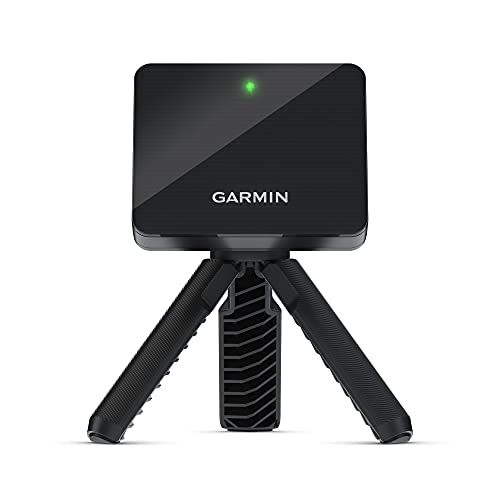
Garmin Approach R10 Portable Launch Monitor
Best for: accurate metric tracking and virtual play
- Launch Monitor Type
- Portable Launch Monitor (what this guide is about)
- Club Data Points
- club head speed, swing tempo
- Battery Life
- up to 10 hours
- Waterproof Rating
- IPX7
- Color
- Black
- Use Location
- Driving Range, Home
View on Amazon: Garmin Approach R10 Portable Launch Monitor Affiliate link
The Garmin Approach R10 is a compact portable launch monitor designed for indoor and range use. It tracks club head speed, ball speed, launch angle, and spin. The device pairs with the Garmin Golf app for video analysis and shot dispersion charts. It features IPX7 waterproofing and lasts up to 10 hours on a single charge. This unit suits players seeking accurate metrics and virtual course play via subscription.
Pros
- IPX7 waterproof rating for durability
- Up to 10 hours of battery life
- Tracks club head speed and ball speed
- Includes phone mount for bag attachment
- Provides shot dispersion charts via app
Cons
- Requires active subscription for virtual course play
- No built-in display for metrics
- Relies on smartphone app for full functionality
Good fit if
- You want to practice at home or the range
- You need accurate ball speed and launch angle data
- You prefer tracking stats via a mobile app
Skip if
- You need a standalone unit without a phone
- You want free virtual round access
- You require a built-in screen for instant feedback
Verdict: The Garmin Approach R10 Portable Launch Monitor delivers precise swing metrics and waterproof durability for dedicated practice sessions. It fits golfers who want detailed app-based analysis and virtual play options.

Voice Caddie SC4 Pro Launch Monitor
Best for: Golfers seeking accurate data and simulation access
- Launch Monitor Type
- Golf Simulator (what this guide is about)
- Display Type
- Built-in Screen
- Simulator Compatibility
- E6 Connect
- Speed Training
- Speed Training/Swing Speed Mode
- Color
- Black
- Use Location
- Driving Range, Indoor, Outdoor, Home
View on Amazon: Voice Caddie SC4 Pro Launch Monitor Affiliate link
The Voice Caddie SC4 Pro is a portable launch monitor using Prometrics Engine technology for indoor and outdoor use. It measures club head data and ball flight with pro-grade accuracy. The unit includes access to E6 Connect and the VOICECADDIE S app for 3D simulation. Weighing 1.3 pounds, it fits easily in your bag. It supports standard golf balls without special markings.
Pros
- Prometrics Engine for precise ball and club head data
- Includes E6 Connect and 3D Driving Range access
- Connects to VOICECADDIE S app for statistical analysis
- Works with standard golf balls indoors and outdoors
Cons
- Requires smartphone app for advanced features
- No dedicated display on the unit itself
- Limited to specific simulator compatibility
Good fit if
- You want pro-grade accuracy for practice
- You need indoor and outdoor versatility
- You prefer using a smartphone app
Skip if
- You need a standalone device with a screen
- You want to avoid app dependency
- You prefer a simpler interface
Verdict: Voice Caddie SC4 Pro Black delivers precise data via its Prometrics Engine and app integration. It suits golfers who value accuracy and simulation access over a standalone display.

Blue Tees Golf Rainmaker Portable Launch Monitor
Best for: Golfers needing portable radar data and simulator use
- Launch Monitor Type
- Portable Launch Monitor (what this guide is about)
- Measurement Technology
- Doppler Radar
- Ball Data Points
- 20+
- Club Data Points
- club speed, smash factor
- Display Type
- 4.3-inch TFT display
- Battery Life
- over 6 hours
View on Amazon: Blue Tees Golf Rainmaker Portable Launch Monitor Affiliate link
The Blue Tees Golf Rainmaker uses Doppler radar to track over 20 ball and club metrics. It features a 4.3-inch TFT display and IPX4 waterproof rating. This portable unit connects to E6 Connect and GSPro simulators. You get six hours of battery life for indoor or outdoor use. It suits golfers wanting real-time data without complex setups.
Pros
- Doppler radar tracks over 20 ball and club metrics
- Built-in 4.3-inch wide-angle TFT display
- Compatible with E6 Connect and GSPro simulators
- IPX4 waterproof construction for outdoor use
Cons
- Battery life is limited to over 6 hours
- Requires a separate app subscription for full analytics
- No mention of wireless connectivity to phones without the app
Good fit if
- You want a portable monitor with a built-in display
- You need simulator compatibility for indoor practice
- You prefer Doppler radar technology for accurate data
Skip if
- You need unlimited battery life without recharging
- You want a monitor with a larger screen
- You prefer a device that works without any app subscription
Verdict: Blue Tees Golf Rainmaker Portable Launch Monitor delivers solid Doppler radar data and simulator compatibility for golfers who practice both indoors and outdoors. It is a practical choice for those who value a built-in display and waterproof durability.
Specifications side by side
| Spec | PHIGOLF Home Golf Simulator Motion Sensor | Voice Caddie SC200Plus Portable Radar | Izzo Swami Launch Master Golf Launch Simulator | Garmin Approach R10 Portable Launch Monitor | Voice Caddie SC4 Pro Launch Monitor | Blue Tees Golf Rainmaker Portable Launch Monitor |
|---|---|---|---|---|---|---|
| Measurement Technology | 9-axis motion sensor | Doppler radar technology | Doppler radar technology | not stated | not stated | Doppler Radar |
| Ball Data Points | not stated | not stated | not stated | not stated | not stated | 20+ |
| Club Data Points | not stated | not stated | club head speed | club head speed, swing tempo | not stated | club speed, smash factor |
| Display Type | not stated | LCD display | LCD display | not stated | Built-in Screen | 4.3-inch TFT display |
| Battery Life | not stated | 12 hours | not stated | up to 10 hours | not stated | over 6 hours |
| Simulator Compatibility | Phigolf, E6 Connect | not stated | not stated | not stated | E6 Connect | E6 Connect, GSPro |
| Speed Training | not stated | not stated | not stated | not stated | Speed Training/Swing Speed Mode | not stated |
| Waterproof Rating | not stated | not stated | not stated | IPX7 | not stated | IPX4 |
| Size | 23.6" | Small | Regular Size | (14' x 20' x 10') | not stated | not stated |
| Color | Black | Gray | Black | Black | Black | Navy |
| Launch Monitor Type | Golf Simulator | Portable Launch Monitor | Golf Simulator | Portable Launch Monitor | Golf Simulator | Portable Launch Monitor |
| Use Location | Indoor, Outdoor, Home | not stated | not stated | Driving Range, Home | Driving Range, Indoor, Outdoor, Home | Indoor, Outdoor |
| Dimensions | 26.2 × 4.92 × 2.76 inches | 36 × 5 × 5 inches | 9.37 × 7.72 × 1.81 inches | 3.5 × 2.8 × 1 inches | 1.92 × 7.59 × 1.14 inches | not stated |
| Weight | 2.09 pounds | 8 ounces | 1 pounds | 12 ounces | 1.3 pounds | not stated |
| Model | 192516000053 | SC200Plus | 689769998423 | 010-02356-00 | SC4 Pro (+ 3D Driving Range Simulator) | not stated |
Frequently asked questions
Is a golf simulator launch monitor the same as a portable one?
No, they serve different primary functions. Golf simulator systems, like the PHIGOLF Home Golf Simulator, focus on full swing mechanics and virtual play, often using motion sensors for indoor home use. Portable launch monitors, such as the Voice Caddie SC200Plus, prioritize compact radar-based data tracking. You choose simulators for immersive practice and portables for quick, accurate metric analysis on the range.
Which launch monitor type is best for indoor home practice?
Golf simulator systems are designed specifically for indoor environments. The PHIGOLF Home Golf Simulator fits players who prioritize swing mechanics and app-based play in a home setting. It is compact, measuring 26.2 inches in length and weighing 2.09 pounds. While some portable units like the Garmin Approach R10 support home use, simulator systems offer dedicated virtual play experiences indoors.
Do portable launch monitors require a smartphone app?
Not necessarily. Some portable models, like the Voice Caddie SC200Plus, provide voice-guided data tracking without relying on smartphone apps. This suits golfers who want portable, radar-based analysis directly from the device. However, other portable options, such as the Garmin Approach R10, integrate with apps for detailed swing metrics and virtual play, offering more comprehensive data access.
What is the size difference between simulator and portable monitors?
Portable launch monitors are generally more compact and lightweight. The Garmin Approach R10 is small, measuring 3.5 inches in length and weighing 12 ounces. In contrast, golf simulator systems like the PHIGOLF Home Golf Simulator are larger, with a length of 26.2 inches and a weight of 2.09 pounds. The Izzo Swami Launch Master sits in between at 9.37 inches long.
Can portable launch monitors be used for golf simulation?
Yes, several portable units support simulation. The Voice Caddie SC4 Pro offers simulation access alongside accurate data via its Prometrics Engine. The Blue Tees Golf Rainmaker also provides simulator compatibility for both indoor and outdoor use. These devices allow you to track ball flight data while engaging with virtual courses, blending portable convenience with immersive practice features.
Which launch monitor type offers the most accurate swing metrics?
Portable launch monitors with radar technology, such as the Garmin Approach R10, deliver precise swing metrics. They are built for dedicated practice sessions and offer detailed app-based analysis. The Voice Caddie SC4 Pro also emphasizes accuracy through its Prometrics Engine. While simulator systems track mechanics, portable radar units focus on delivering specific, high-precision ball flight and club data.
Are golf simulator monitors suitable for driving range use?
Some golf simulator monitors are versatile enough for driving range use. The Voice Caddie SC4 Pro supports use at driving ranges, indoors, outdoors, and at home. The Garmin Approach R10 is also suitable for driving range sessions. These units combine simulation capabilities with the portability needed for range practice, allowing you to track data in various environments.